WBF Academy
Japanese for Beginners

Japanese for Beginners

Beginner

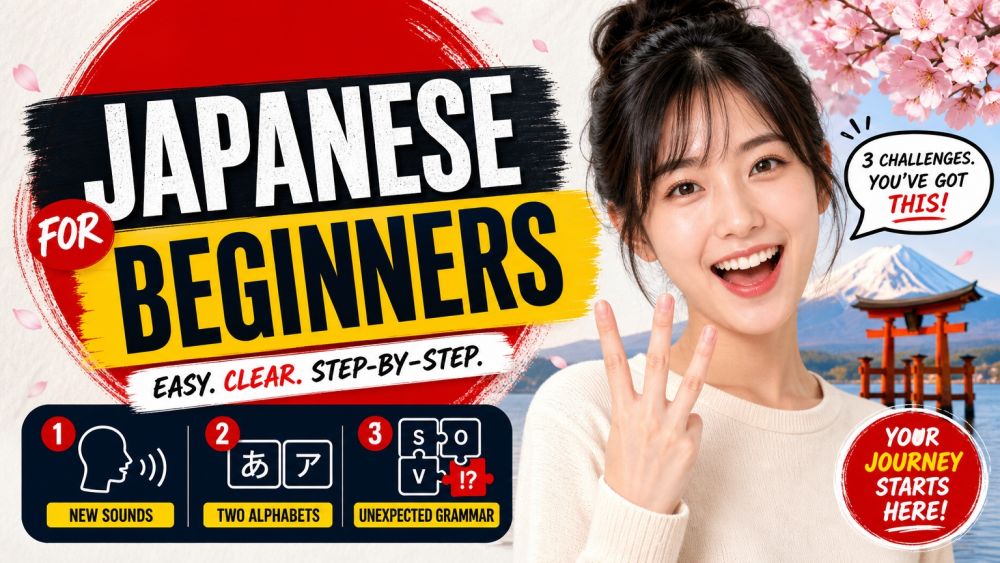
Learning Japanese can feel like starting three languages at once — new sounds, two phonetic alphabets, and a grammar that puts verbs where you don't expect them. This beginner course clears a straight path through all of it, built for someone who has never studied Japanese before. You start with the sound system itself: the five vowels, the crisp syllables, and the everyday greetings and politeness levels you will use in your very first real conversation — konnichiwa, arigatou, and the difference between casual and polite speech. From there you move into reading, learning hiragana and katakana, the two phonetic scripts that let you sound out real Japanese words without relying on romanized spelling, and understanding why kanji is saved for later. You will build the grammar foundations that make Japanese sentences click: the particles wa, o, and ni that mark each word's job in a sentence, the subject-object-verb order that reshapes how you build a thought, and the desu/masu forms that keep everyday speech polite. You will put it all to work in real conversation — introducing yourself, ordering food, shopping, and asking simple questions — and round it out with the daily essentials: numbers, counters, telling time, days of the week, and talking about your routine. By the end you will read basic kana, build simple polite sentences on your own, and hold a short real conversation in Japanese with confidence.

📋 5 tracks ❓ 200 questions 💡 15 tips 🎬 7 videos ⏱ ~6h

Videos

See all

Tracks

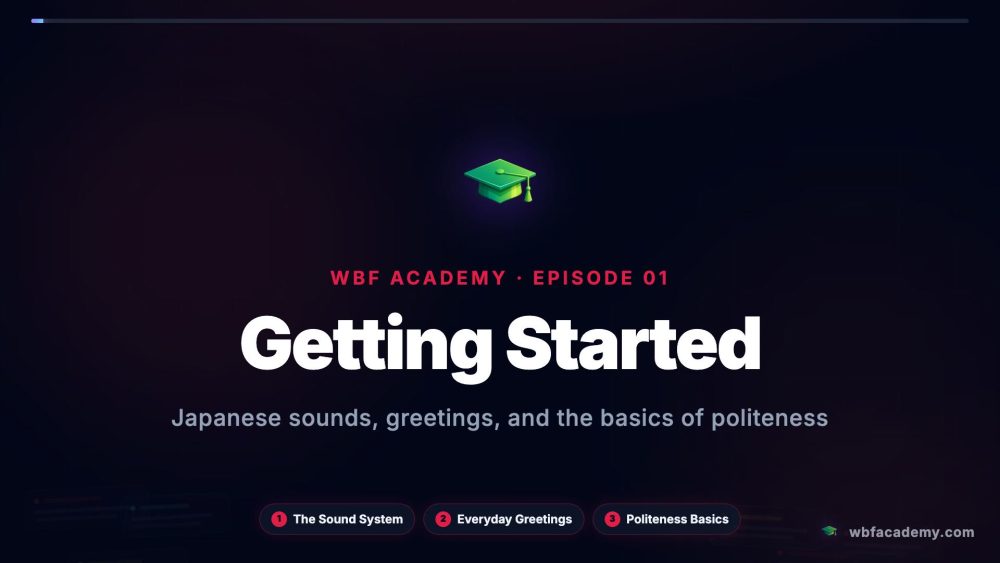
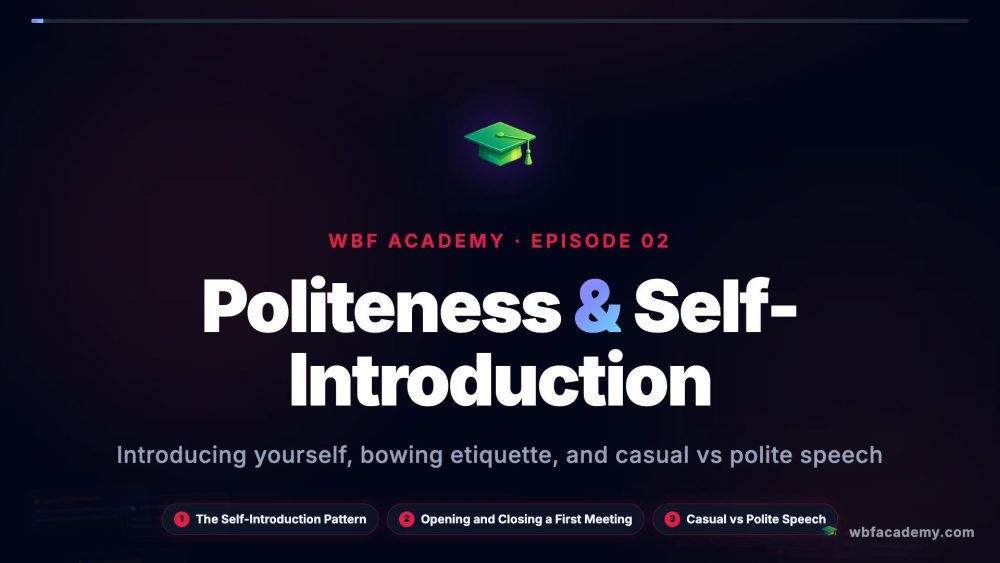
Every language has a sound and a social code, and Japanese has both in ways English speakers don't expect. This track opens with the Japanese sound system — the five clean vowels and the crisp syllables that make up every word — so words never feel like a blur. You will learn everyday greetings like konnichiwa, master common expressions such as arigatou, and understand the politeness levels that shape how Japanese people speak to friends, strangers, and elders differently. You will also learn to introduce yourself simply and correctly. By the end you will greet people naturally and sound polite without overthinking it.

Japanese uses three writing systems at once, but beginners only need two of them to start reading real words. This track teaches hiragana, the core phonetic alphabet used for native Japanese words and grammar, and katakana, the matching alphabet used mainly for foreign loanwords and emphasis. You will learn each character, practice reading short real words instead of isolated symbols, and pick up simple strategies for memorizing shapes that look alike. You will also learn why kanji, the third system, is intentionally left for later study. By the end you will sound out basic hiragana and katakana words on sight, without relying on romanized spelling.

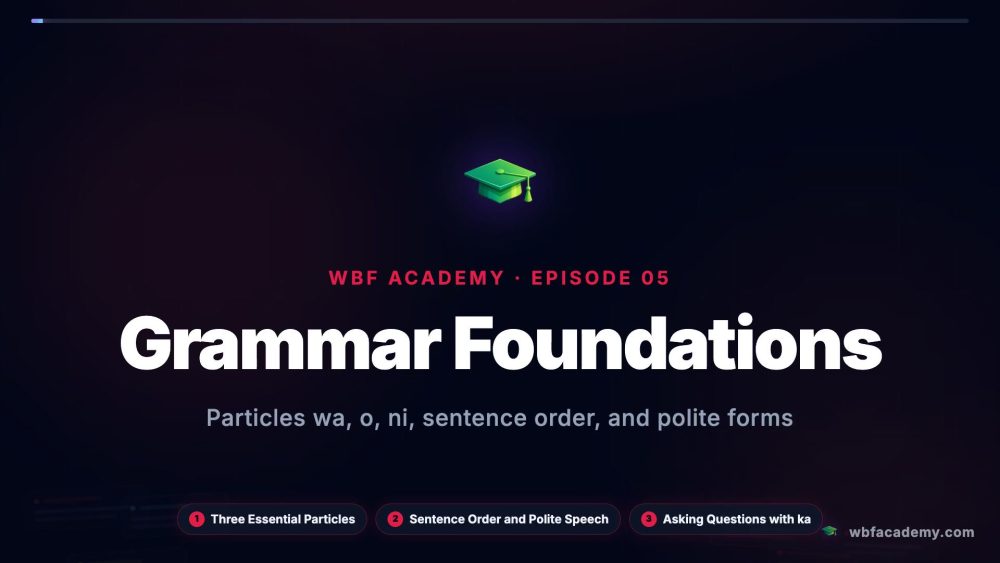
Japanese grammar isn't harder than English, it's just organized differently — and once the pattern clicks, sentences stop feeling backward. This track builds that foundation: the particles wa, o, and ni that mark the topic, object, and direction of a sentence instead of relying on word order alone, and the subject-object-verb structure that puts the verb at the very end. You will learn the desu and masu forms that make everyday sentences sound polite and complete, and practice building simple statements and questions from scratch. By the end you will construct correct, polite Japanese sentences on your own instead of translating word by word.

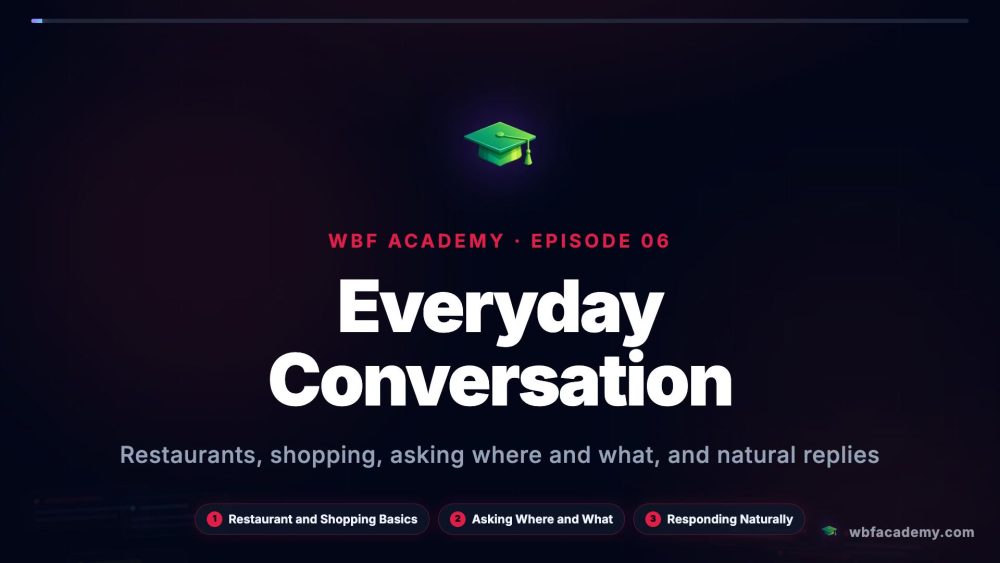
Grammar rules only matter once you can use them to actually talk to someone, and that's what this track is for. You will practice introducing yourself with more detail — name, where you're from, what you do — and handle a real restaurant scene, ordering food and understanding a server's basic questions. You will learn the phrases and vocabulary for shopping, asking prices, and making simple requests, plus how to ask and answer common questions politely. Every lesson centers on language you would actually use, not abstract drills. By the end you will hold short, real conversations about yourself, food, and everyday situations with confidence.

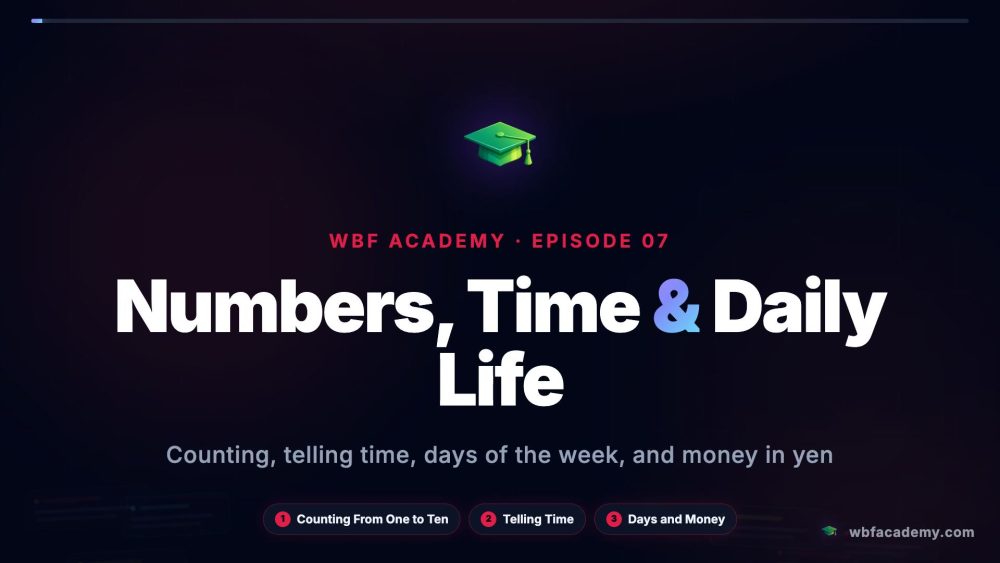
Numbers show up everywhere in daily life — prices, phone numbers, ages, dates — and Japanese has a twist most learners don't expect: counters, small words that change depending on what you're counting. This track covers Japanese numbers from the ground up, the most common counters you will actually need, and how to tell time and talk about hours and minutes. You will learn the days of the week and basic calendar vocabulary, then put it all together describing a simple daily routine — what time you wake up, eat, work, and sleep. By the end you will handle numbers, time, and daily-life conversations without hesitating.

Certification Exam

🏆

Certification Exam

Japanese for Beginners

30
Questions
45m
Time Limit
% 70%
To Pass

All tracks · No time pressure to start

🏆

Certification Exam

Japanese for Beginners

#

30 Questions

All difficulty levels

45 Minutes

Auto-submits when time expires

%

70% to Pass

Earn your certification badge

No Going Back

Once you answer, you move forward

Tips

See all