
WBF Academy
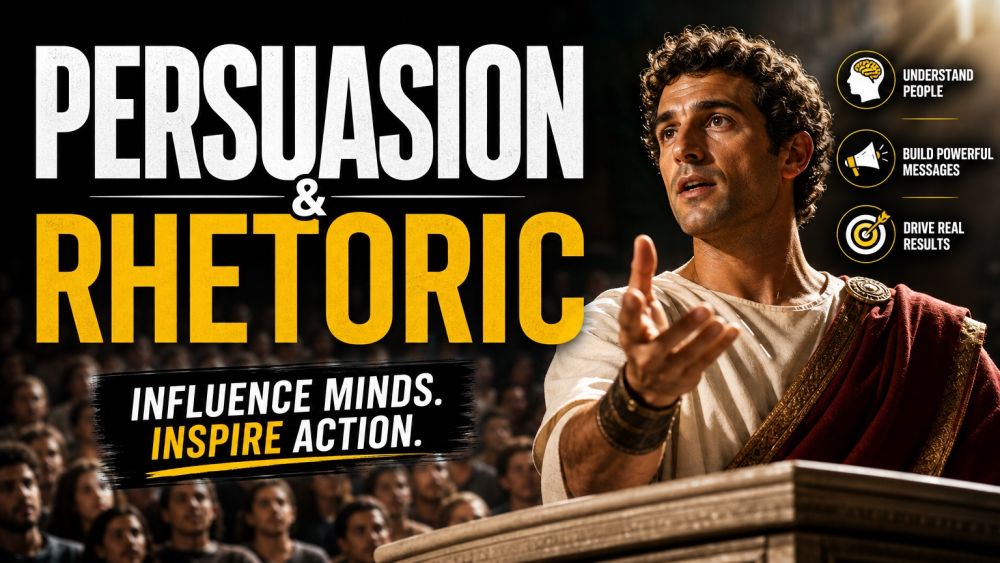
Persuasion & Rhetoric

Persuasion & Rhetoric

Beginner

Persuasion is not a talent some people are born with — it is a set of skills anyone can learn, and this course teaches them from the ground up. Whether you are pitching an idea at work, negotiating a raise, arguing for what your team needs, or simply trying to be heard at the dinner table, the ability to move people to say yes changes what is possible for you. This beginner course starts with the foundations: what persuasion actually is, the three levers every persuasive message rests on — credibility, emotion, and logic — and the line between honest influence and manipulation, which you will learn to stay firmly on the right side of. From there you build a toolkit of rhetorical devices that make language memorable: vivid analogies, deliberate repetition, and images that stick in a listener's mind long after you stop talking. You will learn the psychology behind why people say yes — the mental triggers that quietly shape every decision — and how to use them ethically. You will learn to say more with less, cutting filler until your point lands like a punch line. Finally you will structure a complete argument, from opening to objections to a close that moves people to act. No jargon, no manipulation — just clear, ethical persuasion you can use today.

📋 5 tracks ❓ 200 questions 💡 15 tips 🎬 7 videos ⏱ ~4h

Videos

See all

Tracks

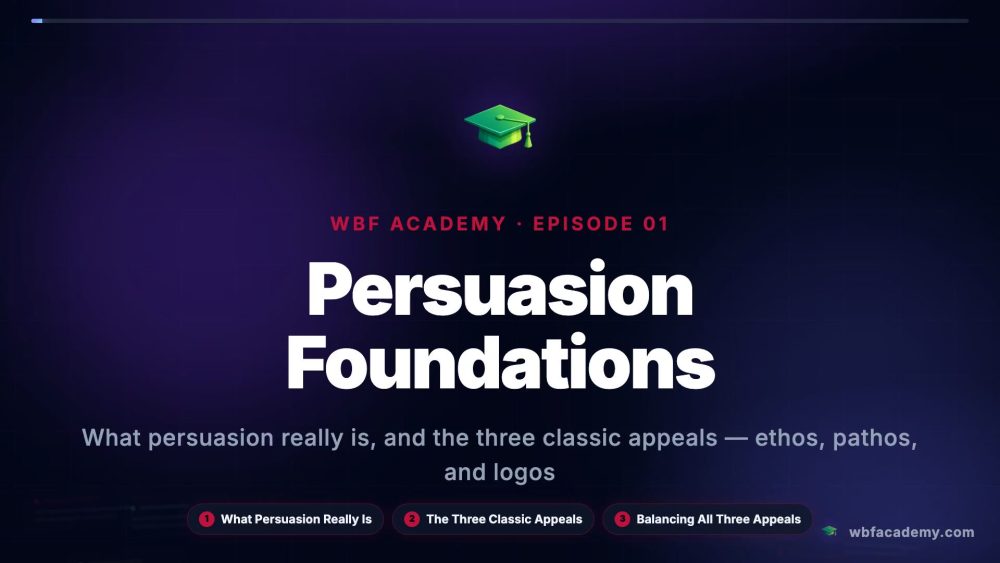
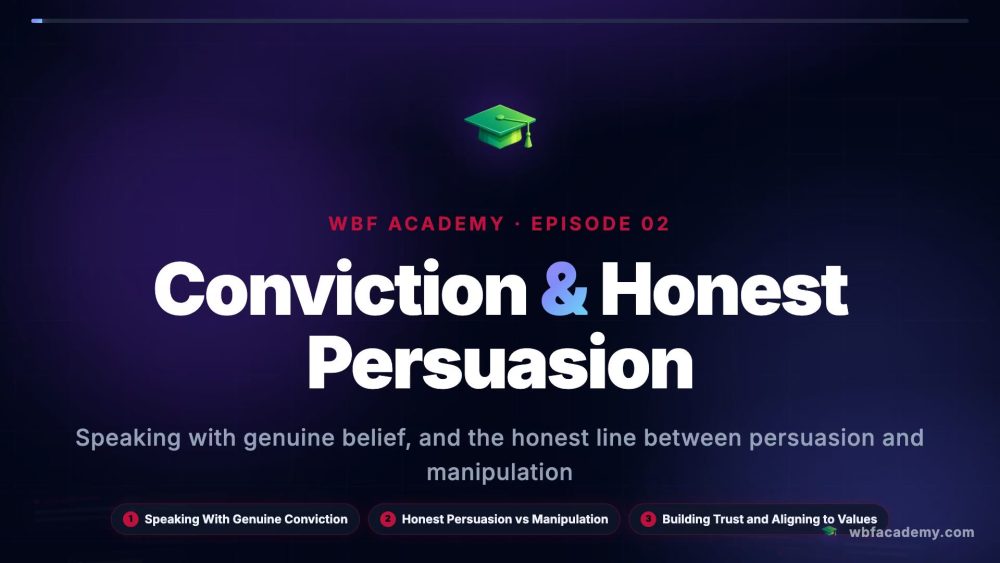
Every persuasive moment rests on the same three pillars, and this track builds them from scratch. You will learn what persuasion actually is and why it is fundamentally different from coercion or trickery. You will study ethos, pathos, and logos — credibility, emotion, and logic — the three levers ancient rhetoricians identified and modern communicators still rely on today. You will practice speaking with genuine conviction, so your words carry weight instead of sounding rehearsed. You will also learn to draw a clear line between honest persuasion and manipulation, and why staying on the right side of that line makes you more effective, not less. By the end you will understand exactly why people say yes.

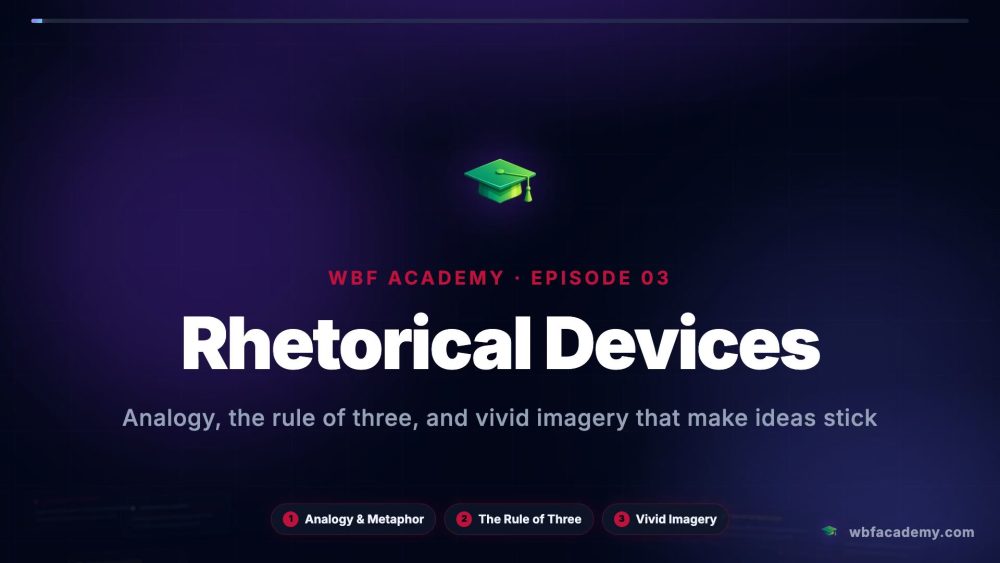
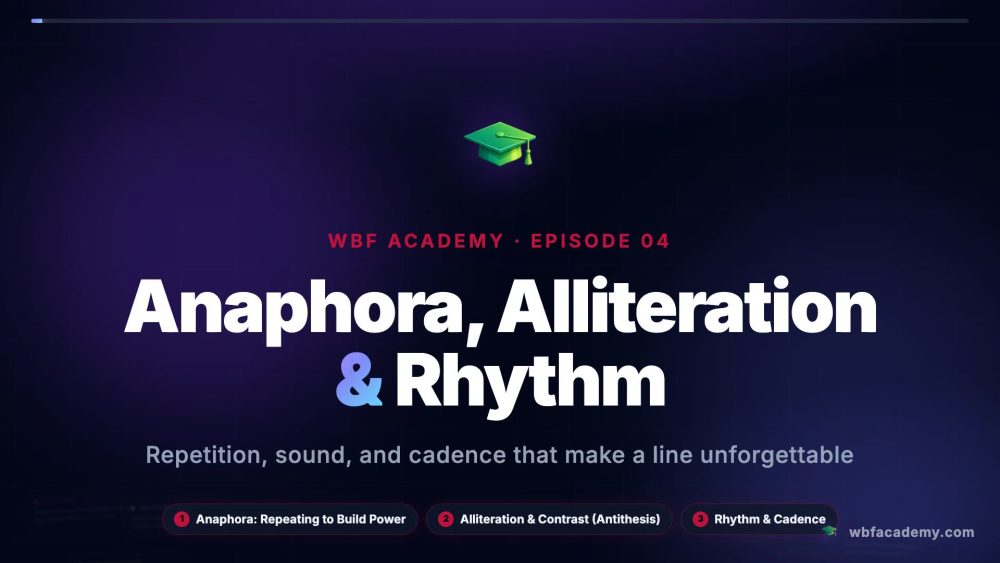
Ideas that are technically correct but forgettable rarely change minds — this track teaches the language patterns that make persuasive speech stick. You will learn to build analogies that make abstract ideas instantly concrete, and to use anaphora, the deliberate repetition that gives speeches their rhythm and drives a point home. You will practice alliteration and other sound patterns that make phrases easier to remember and repeat. You will craft vivid illustrations and metaphors that turn dry arguments into pictures your audience can see. You will also learn how rhythm and pacing shape how a message lands, independent of its content. By the end you will have a toolkit of devices that make your words memorable, not just accurate.

Every decision, no matter how rational it looks, is shaped by mental shortcuts your brain uses automatically — this track teaches you to work with them ethically instead of ignoring them. You will learn the core mental triggers: scarcity, social proof, authority, and reciprocity, and see exactly how each one nudges people toward yes. You will study the Sarick Effect, the counterintuitive tactic of voicing your own weaknesses early to build trust and disarm skepticism before it forms. You will practice weaving these triggers naturally into real conversations, pitches, and requests, without sounding manipulative or scripted. You will also learn where the ethical line sits, so influence stays honest. By the end you will understand the psychology behind every yes you hear.

Long-winded arguments lose people before they reach the point — this track teaches you to say more by saying less. You will learn to take a complex idea and synthesize it into a single clear sentence anyone can repeat back. You will study the power of the punch line, the short, sharp statement placed at exactly the right moment to make an argument land. You will practice writing and delivering memorable one-liners that survive long after the rest of the conversation is forgotten. You will also learn to hear your own filler — the hedges, qualifiers, and throat-clearing that dilute a message — and cut it ruthlessly. By the end you will say what you mean in fewer words, with more impact.

A great argument is not a list of good points — it is a structure, and this track teaches you to build one that holds up under pressure. You will learn how to structure a persuasive argument from the ground up, ordering your points so each one builds on the last. You will practice crafting an opening that earns attention and a call to action that tells your audience exactly what to do next. You will learn to anticipate the objections your argument will face and prepare honest, disarming answers before they are raised. You will also practice handling pushback in the moment without losing your composure or your point. By the end you will close with impact and leave your audience moved to act.

Certification Exam

🏆

Certification Exam

Persuasion & Rhetoric

30
Questions
45m
Time Limit
% 70%
To Pass

All tracks · No time pressure to start

🏆

Certification Exam

Persuasion & Rhetoric

#

30 Questions

All difficulty levels

45 Minutes

Auto-submits when time expires

%

70% to Pass

Earn your certification badge

No Going Back

Once you answer, you move forward

Tips

See all