

Public Speaking for Professionals
BeginnerEvery meeting, pitch, and status update is a chance to be seen as sharper than you are — or to fade into the background. This course is built for working professionals in any field who need to speak with authority in the rooms that decide careers: leadership meetings, client pitches, project reviews, and team presentations. You will start by building executive presence — the credibility and first impressions that make people listen before you say a word, and the labels colleagues quietly assign you based on how you carry yourself. From there you learn to structure any talk around one clear message, with an opening that earns attention, a body that flows logically, and a close that lands. You will practice speaking up in meetings, leading discussions instead of just attending them, and staying concise when it counts. A dedicated track covers slides and visual aids that support your point instead of burying it under bullet points. Finally you will learn to deliver with confidence, handle tough questions and pushback on your feet, and manage the nerves that block strong performance. By the end you will walk into any room ready to be heard.
Videos
See allTracks
People decide how much weight to give your words within seconds of you entering a room — long before you present a single slide. This track builds the executive presence that earns that credibility. You will learn how first impressions form and how to control them, and how colleagues quietly assign you labels — the go-to expert, the hesitant junior, the steady leader — based on small cues in your posture, voice, and eye contact. You will practice projecting confidence at work even when you don't feel it, owning your space in a room, and carrying yourself so people listen before you speak. By the end you will walk in and be taken seriously from the first second.
A talk without structure feels like a ramble, no matter how good the ideas inside it are. This track teaches you to build any presentation around the three parts every strong speech needs: an opening that earns attention, a body that develops your point logically, and a close that leaves people with something to remember. You will learn to boil a talk down to one clear message before you write a single slide, organize supporting points so they flow instead of jump, and use transitions that guide your audience instead of losing them. You will practice cutting anything that doesn't serve your core message. By the end you will structure a clear, logical talk on any topic in minutes, not hours.
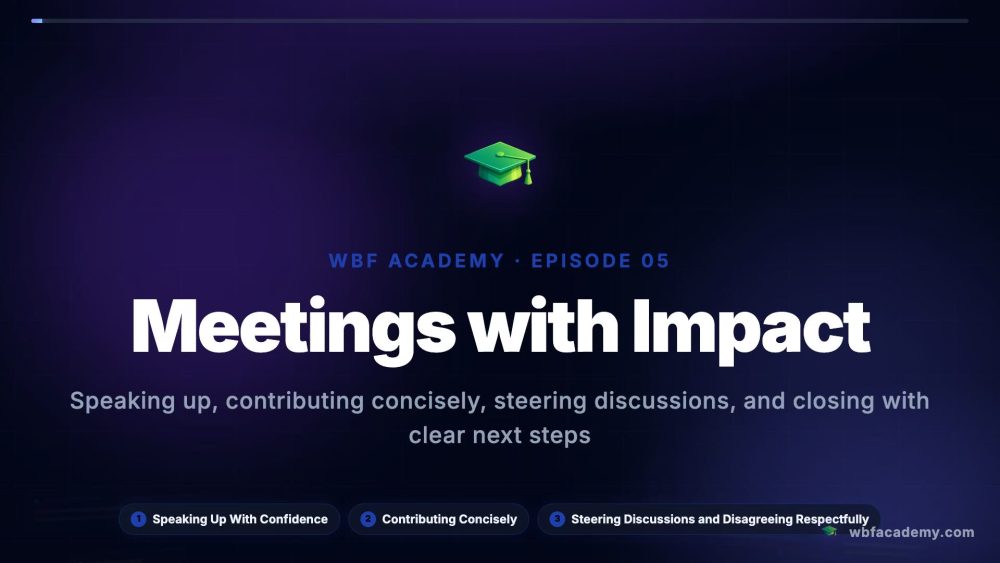
Most careers are shaped less by big presentations and more by what you say — or don't say — in ordinary meetings. This track turns meetings into a place where you build influence instead of disappearing into the background. You will learn what separates a high-impact meeting contribution from noise, how to speak up with confidence even when you are the least senior person in the room, and how to lead a discussion instead of just attending it. You will practice being concise under pressure, framing your point so it lands in one breath, and steering conversations toward decisions instead of letting them drift. By the end you will walk out of every meeting having moved the outcome, not just attended it.
Bad slides don't just look unpolished — they actively work against you, pulling attention away from your words instead of reinforcing them. This track teaches visual aids as a support act, not the main show. You will learn the principles of clean slide design: one idea per slide, minimal text, and layouts that guide the eye instead of overwhelming it. You will practice presenting data clearly — choosing the right chart, cutting clutter, and highlighting the one number that matters instead of drowning it in a table. You will also learn when to skip slides entirely and just talk. By the end your slides will support your message instead of competing with it, and your audience will remember what you said, not what was on the screen.
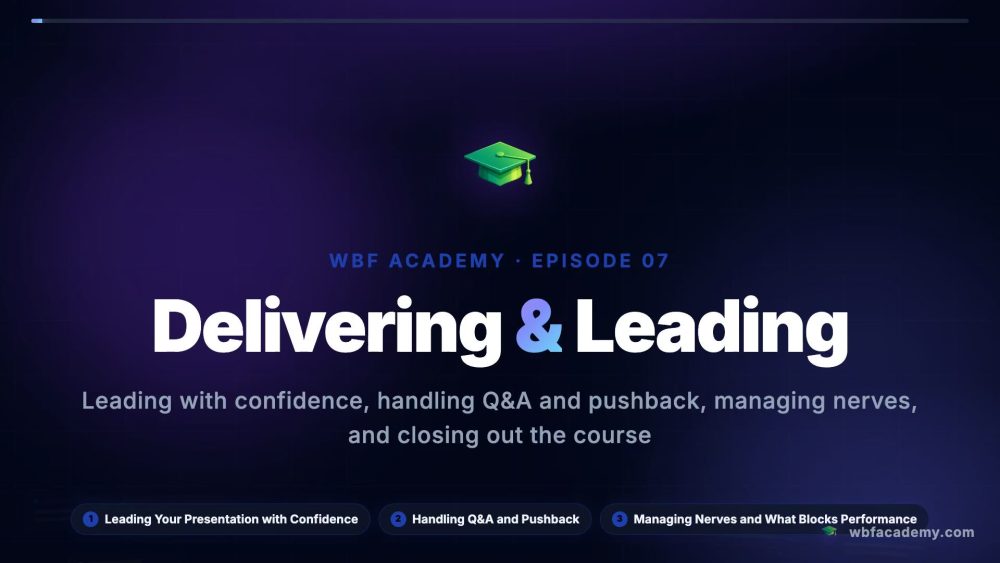
Everything you have built — presence, structure, meeting skills, clean slides — comes together the moment you actually stand up and deliver. This final track focuses on execution. You will learn how to lead and conduct a presentation from the first second to the last, keeping control of pace and energy in the room. You will practice handling tough questions and pushback on your feet without losing composure, turning a hostile question into a chance to reinforce your point. We cover managing nerves before and during a talk, and the specific factors that quietly block high performance — over-rehearsing, monotone delivery, weak eye contact — and exactly how to fix each one. By the end you will deliver, field anything the room throws at you, and perform at your best when it counts.
Certification Exam
Certification Exam
Public Speaking for Professionals
All tracks · No time pressure to start
Certification Exam
Public Speaking for Professionals
30 Questions
All difficulty levels
45 Minutes
Auto-submits when time expires
70% to Pass
Earn your certification badge
No Going Back
Once you answer, you move forward
Tips
See allEnd With a Clear Call to Action
Never let a talk fade out — land it on purpose
Manage Nerves With Preparation Rituals
Confidence is built backstage, not discovered onstage
Answering Tough Questions With Confidence
Acknowledge, answer briefly, and bridge back to your message
Talk to the Audience, Not the Screen
Turning your back to read slides breaks the connection instantly