
WBF Academy
Retirement Planning

Retirement Planning

Beginner

Retirement can feel like a distant, foggy idea — some vague number you are supposed to hit someday, with no clear map to get there. This beginner course replaces the fog with a simple, judgment-free plan that works whether you are 25 and just getting started or 55 and catching up. You will learn what retirement actually costs, how to think about your number, and why even small amounts saved early beat large amounts saved late thanks to compound growth. From there you will make sense of the accounts everyone mentions but few explain clearly — 401(k), IRA, Roth, and pensions — and learn exactly how to prioritize your contributions across them. You will build a simple, low-stress investing approach that shifts safely as you age, then learn how to turn decades of savings into steady income you cannot outlive: how much to withdraw, what order to draw from, and when to start Social Security. Finally you will build a real plan — a target date, a healthcare strategy, and a way to adjust as life changes. By the end you will have a clear, confident retirement plan of your own, no matter your age or income.

📋 5 tracks ❓ 200 questions 💡 15 tips 🎬 7 videos ⏱ ~4h

Videos

See all

Tracks

Retirement planning starts with clarity, not fear. This track breaks down what retirement really costs today, how healthcare and everyday expenses add up over 20 or 30 years, and how to estimate a rough personal target instead of chasing someone else's magic number. You will see why starting early matters so much — money saved at 25 can end up worth far more than the same amount saved at 45, purely because of time and compound growth. You will also learn the biggest myths that stop people from starting at all, like needing to be rich first or believing it is already too late. By the end you will understand the fundamentals well enough to start planning with confidence.

Retirement accounts are full of acronyms that sound intimidating but are simple once explained. This track walks through the employer 401(k) and why capturing the full company match is one of the easiest wins in personal finance, the difference between a traditional and a Roth IRA and how taxes work in each, and how pensions still fit into the picture for people who have them. You will learn what makes these accounts tax-advantaged and why that matters for long-term growth. Most importantly, you will learn a clear order of priority — which account to fund first, second, and third — so every dollar you save works as hard as possible for your future.

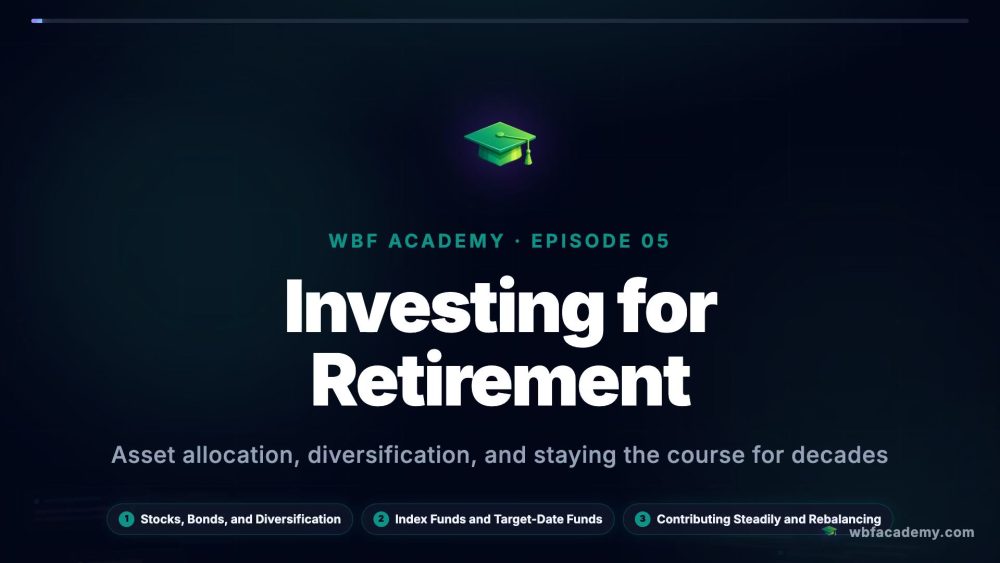
Investing for retirement does not require picking stocks or timing the market — it requires a simple, steady system. This track covers asset allocation, the mix of stocks and bonds that balances growth and safety, and why low-cost index funds are the easiest way for beginners to own a diversified slice of the market. You will learn how your ideal mix shifts as you age, becoming more conservative as retirement approaches, and why the biggest threats to your returns are usually high fees and emotional decisions, not bad luck. By the end you will have a clear, low-maintenance investing approach you can stick with for decades.

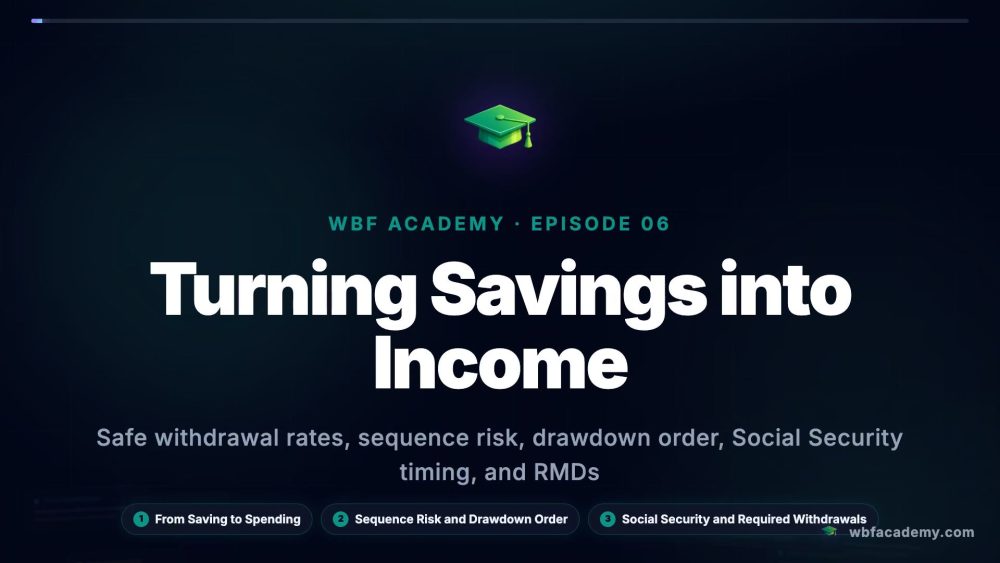
Saving is only half the challenge — the other half is turning decades of savings into income that lasts as long as you do. This track teaches the safe withdrawal rate, a simple rule of thumb for how much you can spend each year without running out, and the smart order to draw from different accounts to minimize taxes. You will learn how Social Security timing changes your monthly benefit for life, what required minimum distributions are and when they kick in, and the common mistakes that cause retirees to run low on money too soon. By the end you will know how to convert savings into dependable income.

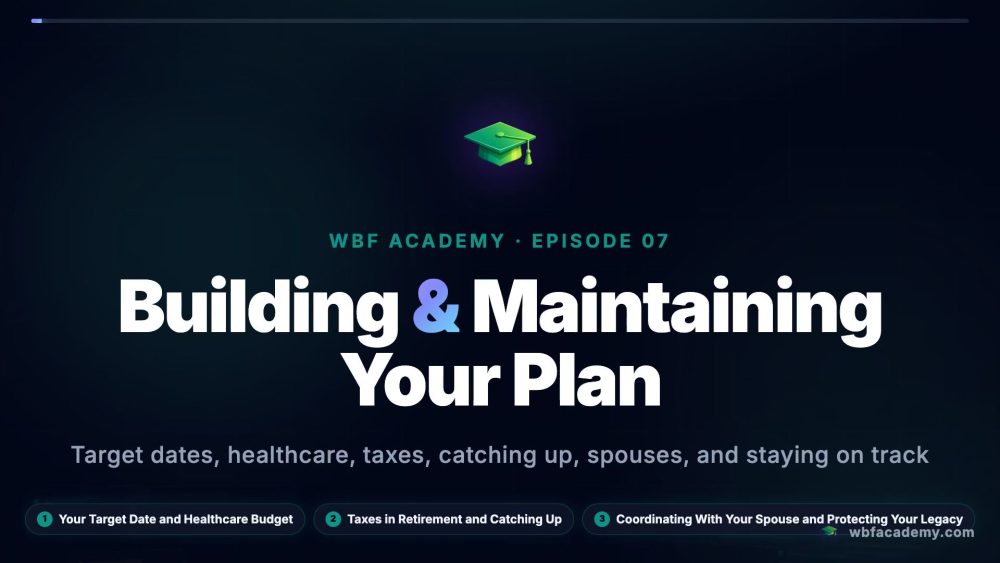
This track pulls everything together into one real, personal plan. You will learn how to set a realistic target retirement date based on your savings and goals, why healthcare and long-term care costs deserve special planning, and how taxes work differently once you are living off savings instead of a paycheck. You will also learn how to check in on your plan regularly and adjust it as life, income, and markets change, so it stays realistic instead of going stale. Finally you will look at simple ways to think about passing wealth on to the people or causes you care about. By the end you will have a complete roadmap, not just a savings goal.

Certification Exam

🏆

Certification Exam

Retirement Planning

30
Questions
45m
Time Limit
% 70%
To Pass

All tracks · No time pressure to start

🏆

Certification Exam

Retirement Planning

#

30 Questions

All difficulty levels

45 Minutes

Auto-submits when time expires

%

70% to Pass

Earn your certification badge

No Going Back

Once you answer, you move forward

Tips

See all