First Aid Essentials
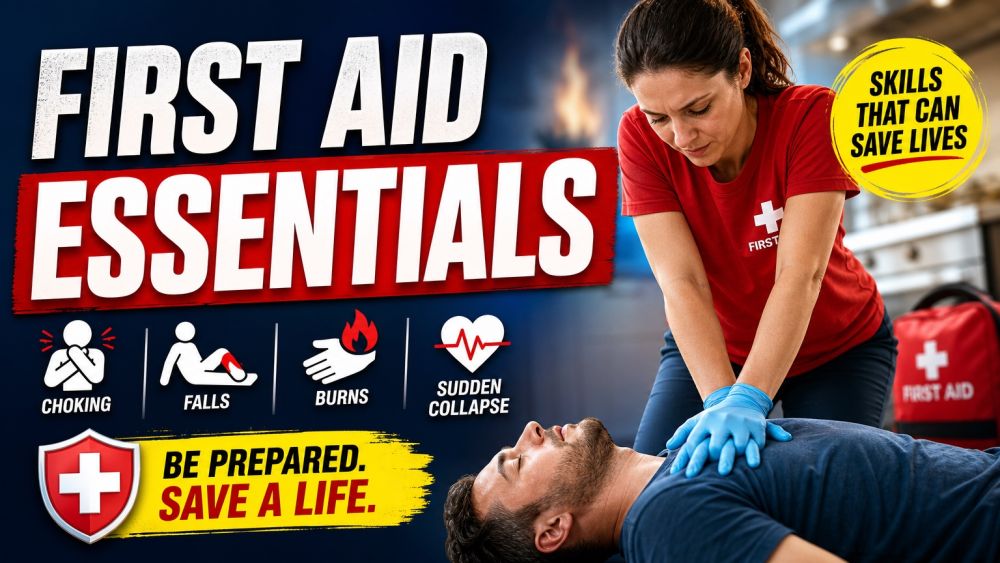
BeginnerEmergencies rarely wait for a convenient moment — a choking toddler, a bad fall, a burn on the stove, a sudden collapse. This course exists so you are not frozen in that moment, wondering what to do first. First Aid Essentials teaches the widely-taught first aid principles used in most first aid and CPR courses, broken into clear, practical steps you can actually remember under pressure. You will start with the basics: how to assess a scene safely, when and how to call for emergency help, and how to check whether someone is responsive and breathing before you do anything else. From there you move into the skills people fear most and need most — hands-only CPR, using an AED, and helping someone who is choking. You will learn to control bleeding, clean and dress wounds, and treat burns and sprains correctly the first time. You will learn to recognize the signs of a heart attack, a stroke, a severe allergic reaction, a seizure, and a diabetic emergency, and what to do in each case. The course finishes with everyday safety at home — falls, poisoning, fevers, and simple prevention. This is not a substitute for a certified first aid or CPR class, but a calm, confident starting point for parents, grandparents, caregivers, and anyone who wants to be ready.
Videos
See allTracks
Every first aid situation starts the same way — before you can help, you need to stay calm and take the right first steps. This track covers the fundamentals that come before any specific skill: how to check a scene for danger before you approach, how and when to call emergency services, and what information to give them. You will learn the primary check — is the person responsive, are they breathing — and why this order matters. You will also learn what belongs in a basic first aid kit and when to act immediately versus wait for help. By the end you will know exactly how to start.
When someone stops breathing, seconds matter, and this track prepares you to act instead of freeze. You will learn to recognize the signs of cardiac arrest and understand why calling for help and starting CPR immediately gives the best chance of survival. You will practice the steps of hands-only CPR, including hand placement and the compression rate to aim for, and learn how an AED works and why it is safe to use even without training. You will learn the differences between performing CPR on an adult versus a child. Finally, you will learn how to recognize and respond to choking, including the Heimlich maneuver, for both adults and children. By the end you will know exactly what to do.
Most injuries people face are not dramatic emergencies, but they still deserve the right care, and this track teaches you exactly that. You will learn how to clean and dress a basic cut so it heals well and avoids infection, and the steps for controlling serious bleeding using direct pressure and proper technique. You will learn how to recognize and treat burns of different severities, and the right first response for sprains and strains, including rest and support. You will also learn to tell the difference between an injury you can handle yourself and one that needs stitches or a trip to urgent care. By the end you will treat everyday wounds with confidence and know when to escalate.
Some emergencies are medical rather than injury-based, and recognizing them fast can save a life. This track teaches you to spot the signs of a heart attack and understand why every minute before help arrives matters. You will learn the FAST test for recognizing a stroke — face, arms, speech, time — and why acting on it quickly changes outcomes. You will learn how to recognize a severe allergic reaction, or anaphylaxis, and how to respond, including the use of an epinephrine auto-injector. You will learn what a seizure looks like and how to keep someone safe during one, and how to recognize and help with a diabetic emergency. By the end you will know the warning signs that call for immediate action.
Most first aid happens at home, over small, everyday incidents rather than dramatic emergencies. This track prepares you for exactly those moments. You will learn how to respond to falls and possible head injuries, including the warning signs that mean you should seek medical attention. You will learn what to do in case of poisoning, from household chemicals to medications, and when to call poison control. You will learn how to handle fevers, nosebleeds, and the minor bumps and scrapes that fill everyday life with kids and adults alike. Finally, you will learn practical ways to prevent accidents at home before they happen, from simple habits to small changes around the house. By the end you will handle the ordinary moments with calm and confidence.
Certification Exam
Certification Exam
First Aid Essentials
All tracks · No time pressure to start
Certification Exam
First Aid Essentials
30 Questions
All difficulty levels
45 Minutes
Auto-submits when time expires
70% to Pass
Earn your certification badge
No Going Back
Once you answer, you move forward
Tips
See allBuild Your Family Emergency Plan
Preparation turns panic into action
Preventing Heat Exhaustion and Heatstroke
Know the signs before they become an emergency
Treating Minor Burns the Right Way
Cool water, not ice, is your first step
Staying Safe During a Seizure
Protect, do not restrain