

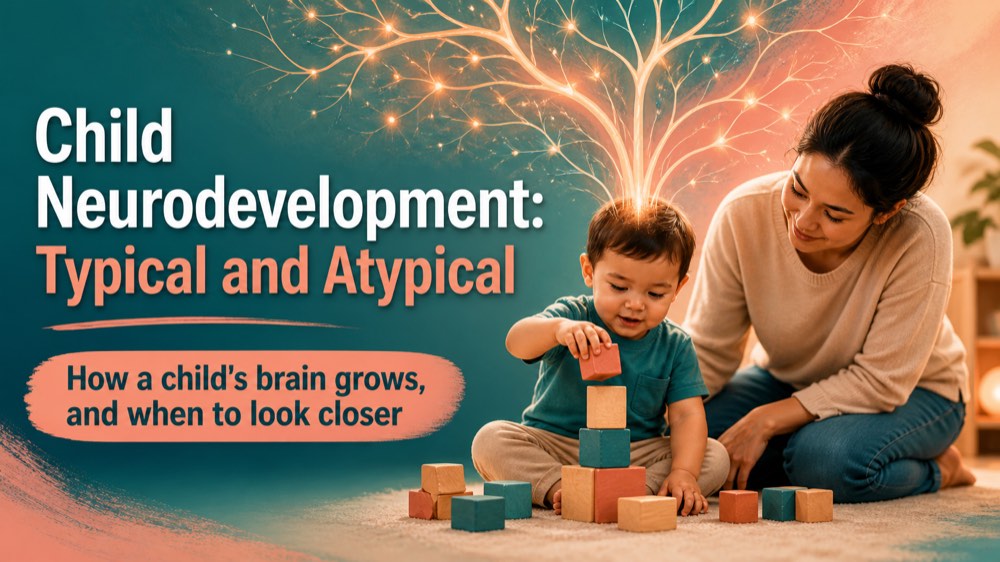
Child Neurodevelopment: Typical and Atypical
BeginnerHow a child's brain builds itself, from birth to about six, and how to tell a child who is simply on their own schedule from one who needs a closer look. The course starts with the brain under construction — neurons, synapses, pruning and myelin — and with plasticity: why early experience matters so much, and why the idea that a window slams shut forever at age three is a myth. It then walks through the milestones parents and teachers actually watch — motor, language, social-emotional and thinking skills — as ranges, not deadlines, using the CDC's 2022 checklists. It names the warning signs worth acting on, above all any loss of a skill a child already had, and explains how screening and evaluation work, who does them, and why an early evaluation costs little and waiting can cost a lot. It presents the neurodevelopmental conditions as DSM-5-TR describes them — autism, ADHD, intellectual disability, dyslexia and other learning disorders, developmental coordination disorder — with honest numbers, and it clears away the myths that still circulate: vaccines do not cause autism, sugar does not cause ADHD, bilingual homes do not cause language delay. It closes with what helps: early intervention, therapies ranked by evidence rather than by marketing, the family's role, inclusive school and the rights that protect the child. For parents, caregivers and educators. Educational content — it does not diagnose and does not replace a health professional.
Course content
Certification Exam
Certification Exam
Child Neurodevelopment: Typical and Atypical
🔒 Unlock the exam
Complete the requirements above to unlock the exam
Certification Exam
Child Neurodevelopment: Typical and Atypical
30 Questions
All difficulty levels
45 Minutes
Auto-submits when time expires
70% to Pass
Earn your certification badge
No Going Back
Once you answer, you move forward
Tips
See allNo babbling, no gestures, no response to their name by 12 months deserves a look -- and start with hearing and vision
A handful of red flags cluster around the first birthday, and when language i...
An individualized plan, not a diagnosis alone, unlocks classroom support
In Brazil, the PEI and laws like Lei Berenice Piana and the LBI protect a chi...
Losing a skill a child already had is never something to 'wait and see' about
Regression -- words, gestures or motor skills that disappear -- is a signal t...
Two toddlers playing 'together' side by side without interacting is normal, not antisocial
Play moves through predictable stages -- solitary, then parallel, then cooper...