
WBF Academy
Home Administration

Home Administration

Beginner

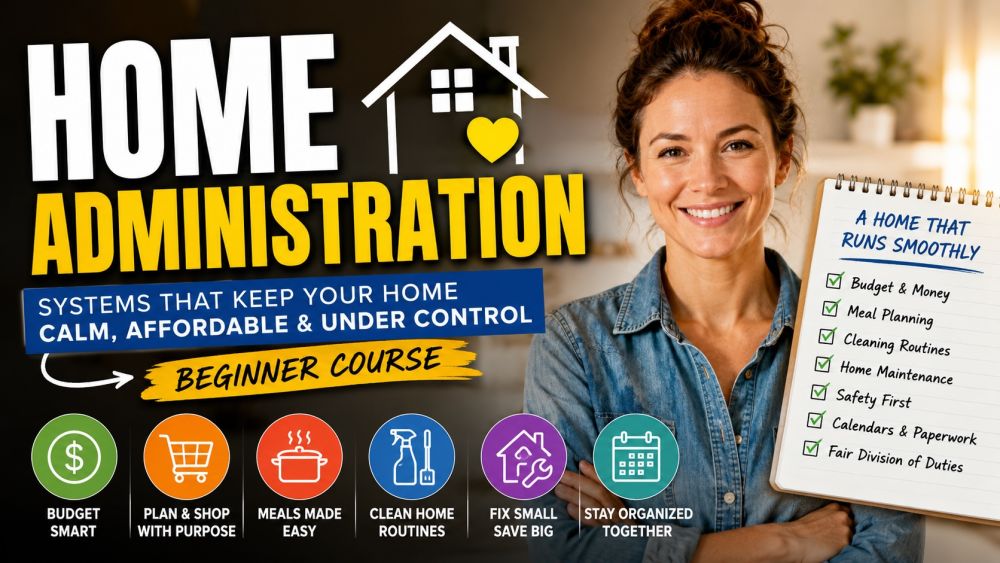
Running a home is real work — and almost nobody is taught how to do it well. This beginner course gives you the practical systems that keep a household calm, affordable, and under control. You will learn to build a household budget that actually holds up, track where the money goes, and tell needs from wants without guilt. You will plan meals that save time and cut food waste, shop with a list that beats impulse buys, and stock a kitchen that always has a dinner in it. From there you will set up cleaning routines that stop chores from piling up, learn basic home maintenance so small problems never become expensive ones, and put simple safety habits in place. Finally you will master the logistics — shared calendars, important paperwork, and fair division of duties — that keep a busy household from falling apart. No jargon, no code: just the everyday skills that make a home easier to run.

📋 5 tracks ❓ 50 questions 💡 10 tips 🎬 5 videos ⏱ ~3h

Videos

See all

Tracks

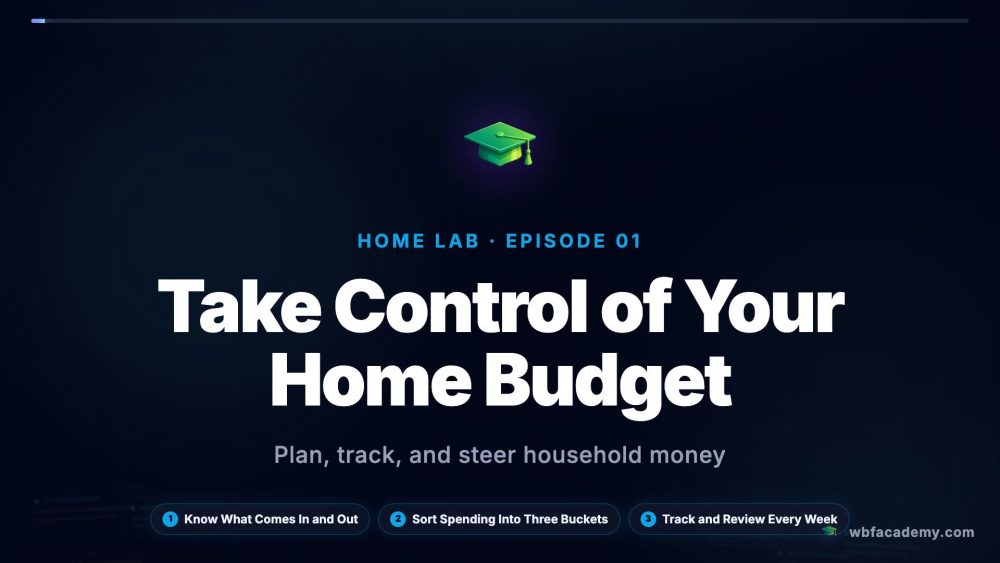
Money stress at home almost always comes from not having a plan — not from not having enough. Start here: build a simple monthly budget that lists income, fixed bills, and flexible spending so you always know what is safe to spend. You will learn easy methods like the 50/30/20 split and zero-based budgeting, how to track expenses without spreadsheets you will never open, and how to tell a real need from a tempting want. Then build the safety net every home should have — a small emergency fund — and learn to spot the slow leaks like subscriptions and impulse buys that drain a budget quietly. By the end you can run the household finances with confidence instead of anxiety.

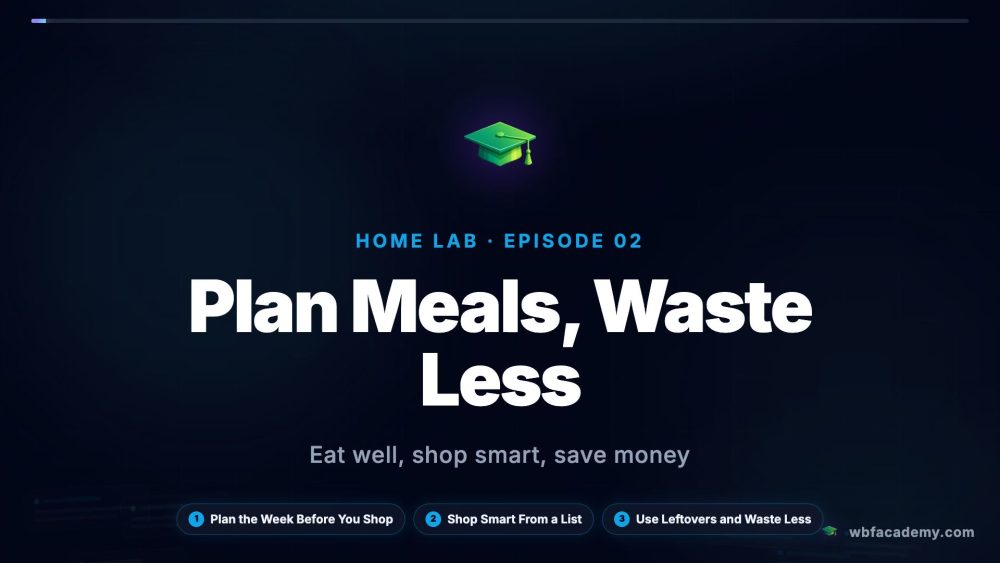
Food is one of the biggest controllable costs in any home — and one of the easiest to waste. Learn to plan a week of meals in minutes, build a grocery list from that plan, and shop in a way that beats both impulse buys and last-minute takeout. You will keep a stocked pantry of staples so there is always something to cook, learn safe food storage and use-by basics so less ends up in the bin, and pick up batch-cooking and leftover tricks that turn one effort into several meals. By the end you can feed a household well for less, with far fewer "what's for dinner?" emergencies.

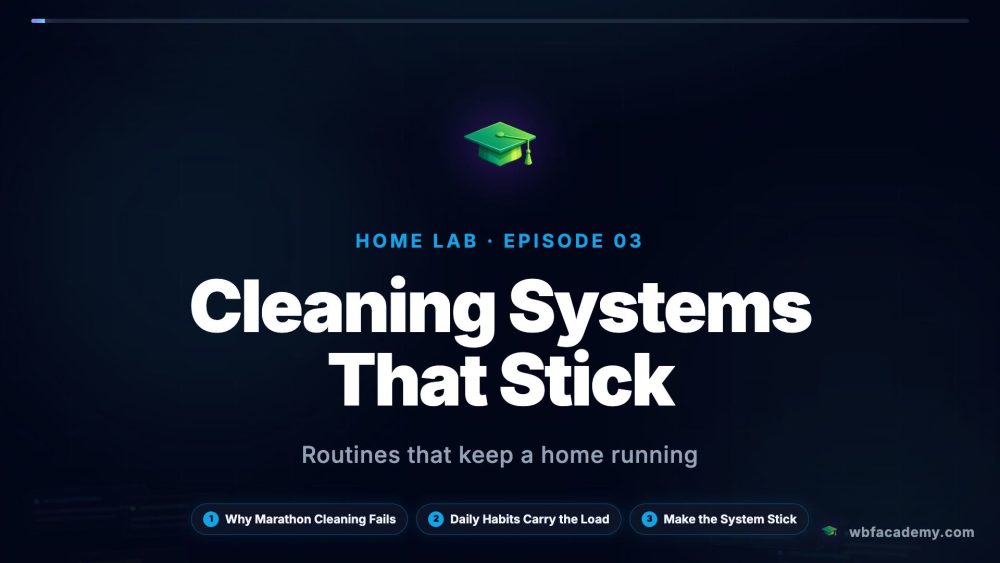
A clean home is not about scrubbing harder — it is about good routines that stop mess from building up. Learn to split chores into daily, weekly, and seasonal lists so nothing gets forgotten and nothing becomes overwhelming. You will pick up fast tidying methods, the right order to clean a room so you never redo work, and which products and tools actually matter versus marketing. You will also learn to declutter using simple keep-or-toss rules, set up storage so things have a home, and share the load fairly with a chore system everyone can follow. By the end you have a repeatable rhythm that keeps the whole home presentable with far less effort.

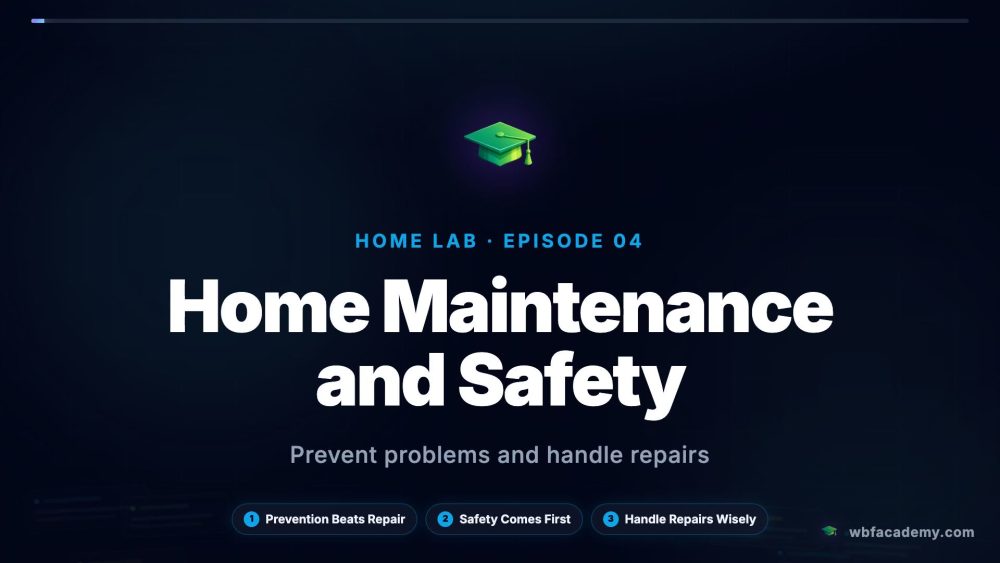
Most expensive home problems start small and ignored. Learn the basic maintenance habits that catch them early: where the water shutoff and breaker box are, how to change filters and check smoke detectors, and a simple seasonal checklist that keeps a home in good shape. You will learn to handle small fixes yourself — a running toilet, a tripped breaker, a clogged drain — and, just as important, how to know when to call a professional instead of making it worse. The track also covers core home safety: fire and carbon-monoxide basics, a stocked first-aid and emergency kit, and what to do when something goes wrong. By the end you can prevent the common disasters and respond calmly to the ones that still happen.

A busy household runs on logistics — and when they break down, everything feels chaotic. Learn to set up a shared family calendar so appointments, school events, and deadlines never get missed or double-booked. You will build a simple system for important paperwork — bills, warranties, IDs, medical and insurance documents — so you can find anything in minutes instead of panicking. The track covers dividing chores and responsibilities fairly so resentment does not build, planning ahead for trips and busy weeks, and keeping a household contact and routine list anyone in the family can follow. By the end you can keep a full household coordinated, organized, and far less stressful for everyone in it.

Certification Exam

🏆

Certification Exam

Home Administration

30
Questions
45m
Time Limit
% 70%
To Pass

All tracks · No time pressure to start

🏆

Certification Exam

Home Administration

#

30 Questions

All difficulty levels

45 Minutes

Auto-submits when time expires

%

70% to Pass

Earn your certification badge

No Going Back

Once you answer, you move forward

Tips

See all