WBF Academy
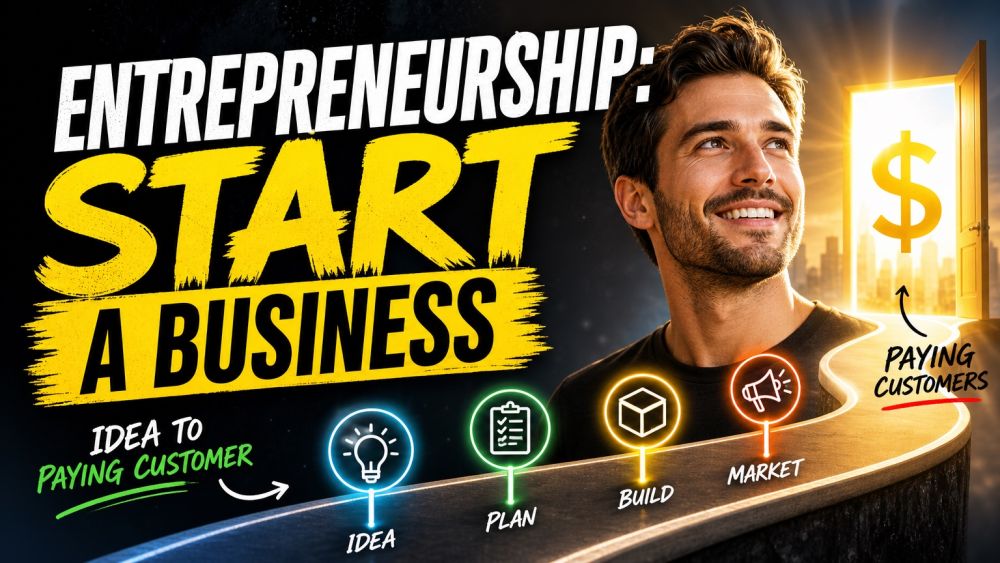
Entrepreneurship: Start a Business

Entrepreneurship: Start a Business

Beginner

Most people who dream of starting a business never do — not because they lack ideas, but because no one showed them the path from idea to paying customer. This beginner course is that path, stripped of hype and jargon, built for someone starting from zero on the side of a job. You will begin where good businesses really begin: finding a problem worth solving and shaping an idea around a real customer, not just a cool product. Then you will learn to validate that idea before spending money or quitting anything — talking to customers, testing demand, and killing bad ideas cheaply. From there you build a minimum viable product: the smallest thing you can offer to start learning and earning. You will learn practical, low-budget marketing and sales to get your first customers, and finally the operations and money basics every founder needs — pricing, cash flow, simple bookkeeping, and legal basics. Throughout, we favor small, reversible, real-world experiments over big risky bets. By the end you will have a clear, testable plan to launch something real without betting the house.

📋 5 tracks ❓ 250 questions 💡 20 tips 🎬 10 videos ⏱ ~5h

Videos

See all

Tracks

Great businesses solve real problems, so that is where this track starts. You will learn to spot problems worth solving in your own life and work, and to shape an idea around a specific customer instead of falling in love with a clever product. We cover the difference between a hobby, a job, and a business, how to evaluate an opportunity, and why "who is this for and what pain does it remove" beats any flash of inspiration. You will also learn to size a market simply and to pick an idea that fits your skills, budget, and life. By the end you will have a real problem and a promising idea to test.

Most startups fail because they build something nobody wants. This track teaches you to test an idea before you invest time or money. You will learn to talk to potential customers the right way — asking about their problems, not pitching your solution — and to read what people do, not just what they say. We cover cheap demand tests like landing pages, pre-orders, and a simple "smoke test," plus how to define the riskiest assumption and test it first. You will learn when a signal is real, when to pivot, and when to walk away without regret. By the end you will know whether your idea has legs before you bet on it.

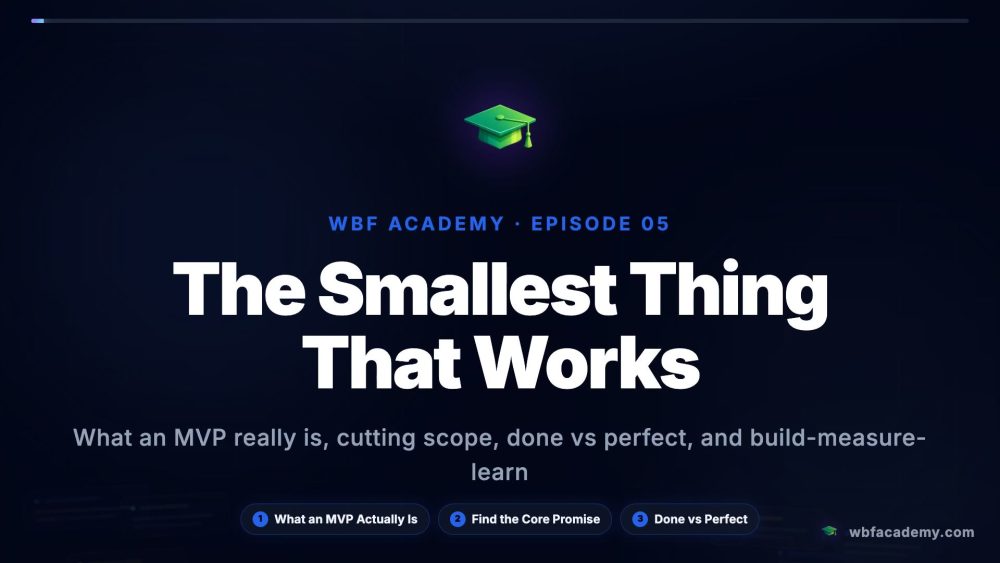
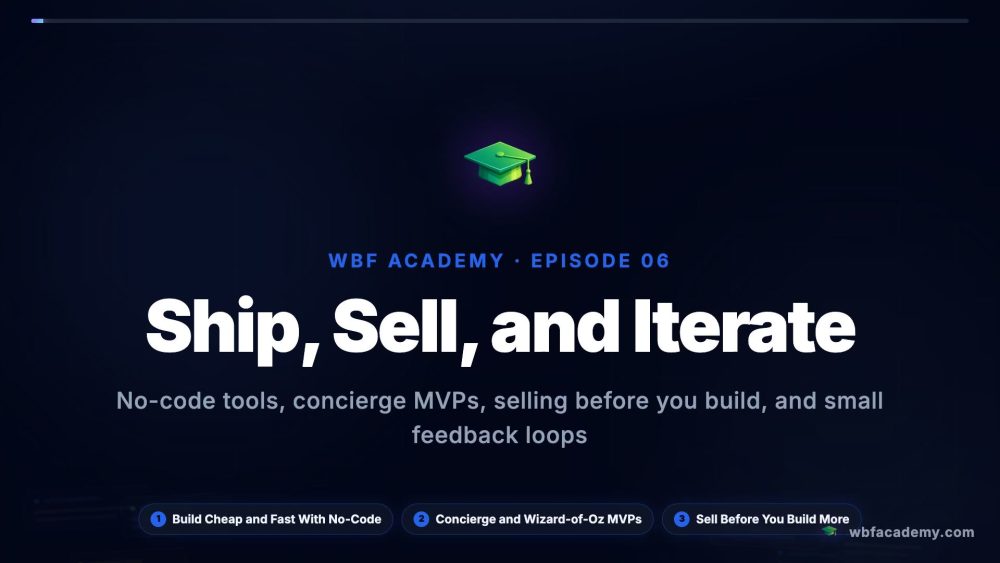
You do not need a perfect product to start — you need the smallest version that delivers real value. This track teaches the minimum viable product: what to build first, what to leave out, and how to launch fast so you learn from real customers. You will learn to define the core promise, choose no-code and low-cost tools, and even sell before you build with a concierge or "Wizard of Oz" approach. We cover setting a first price, gathering feedback, and iterating in small loops. The goal is momentum and learning, not perfection. By the end you will know how to ship a real first version in weeks, not years.

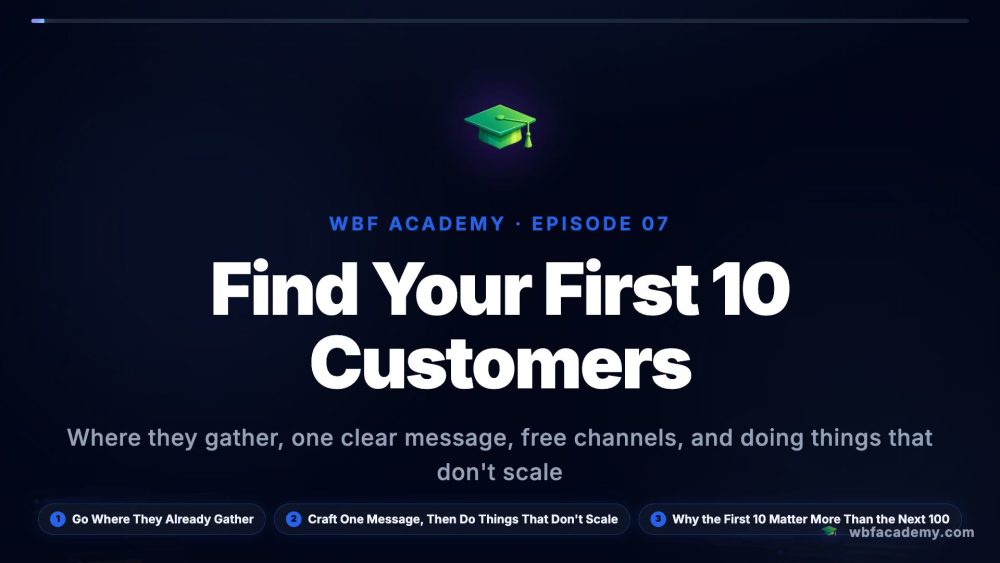
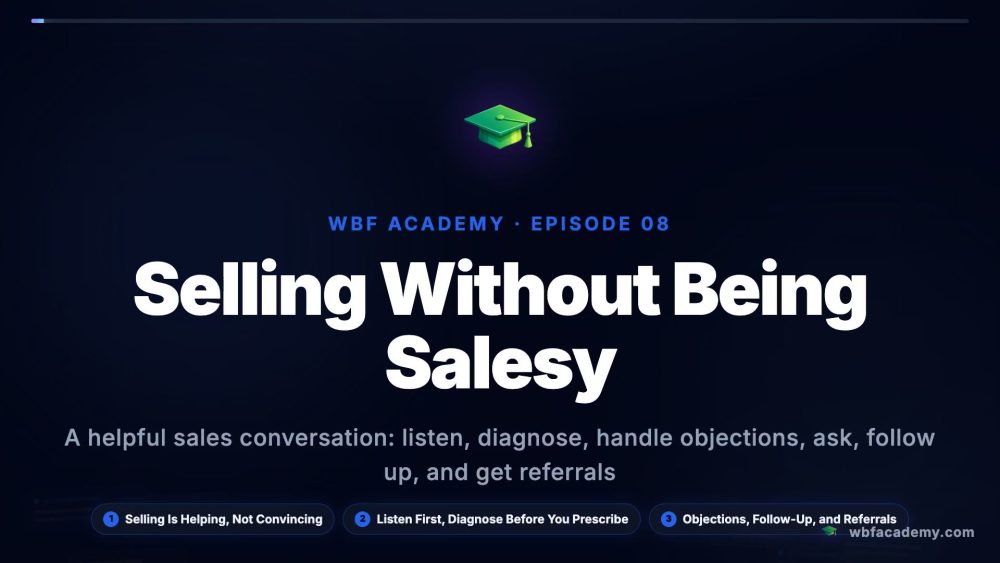
A product with no customers is just a hobby, so this track is about getting those crucial first sales without a big budget. You will learn to find where your customers already hang out, craft a simple message that speaks to their problem, and use free and cheap channels — content, community, referrals, and direct outreach — to reach them. We demystify selling for people who hate selling: how to have a helpful sales conversation, handle objections, and ask for the sale without being pushy. You will also learn to turn early customers into referrals and repeat buyers. By the end you will have a concrete plan to land your first paying customers.

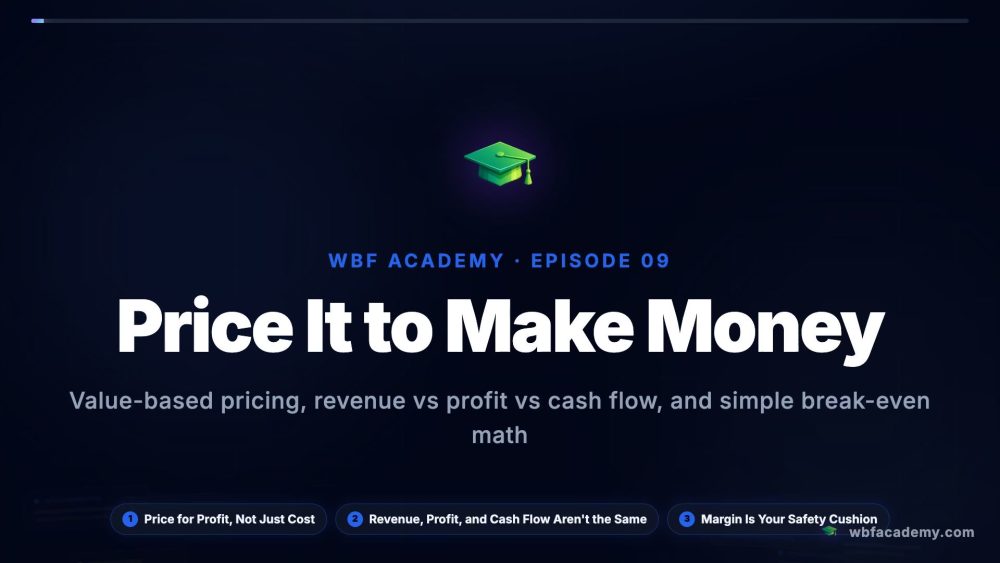
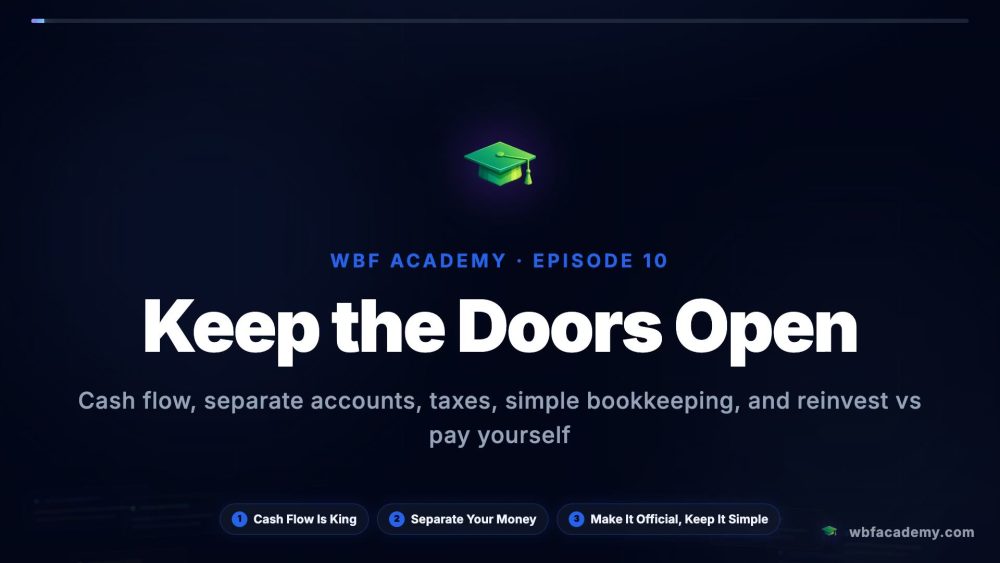
Passion does not pay rent — this final track covers the money and operations basics that keep a business alive. You will learn to price for profit (not just to cover costs), understand the difference between revenue, profit, and cash flow, and why a profitable business can still run out of money. We keep the numbers simple: basic bookkeeping, a break-even point, and reading whether you are actually making money. You will also cover the practical setup — registering a business, basic legal and tax awareness, and simple systems so operations do not eat your life. Nothing here requires an accounting degree. By the end you will run the money side with confidence instead of fear.

Certification Exam

🏆

Certification Exam

Entrepreneurship: Start a Business

30
Questions
45m
Time Limit
% 70%
To Pass

All tracks · No time pressure to start

🏆

Certification Exam

Entrepreneurship: Start a Business

#

30 Questions

All difficulty levels

45 Minutes

Auto-submits when time expires

%

70% to Pass

Earn your certification badge

No Going Back

Once you answer, you move forward

Tips

See all