WBF Academy
Investing & the Stock Market

Investing & the Stock Market

Beginner

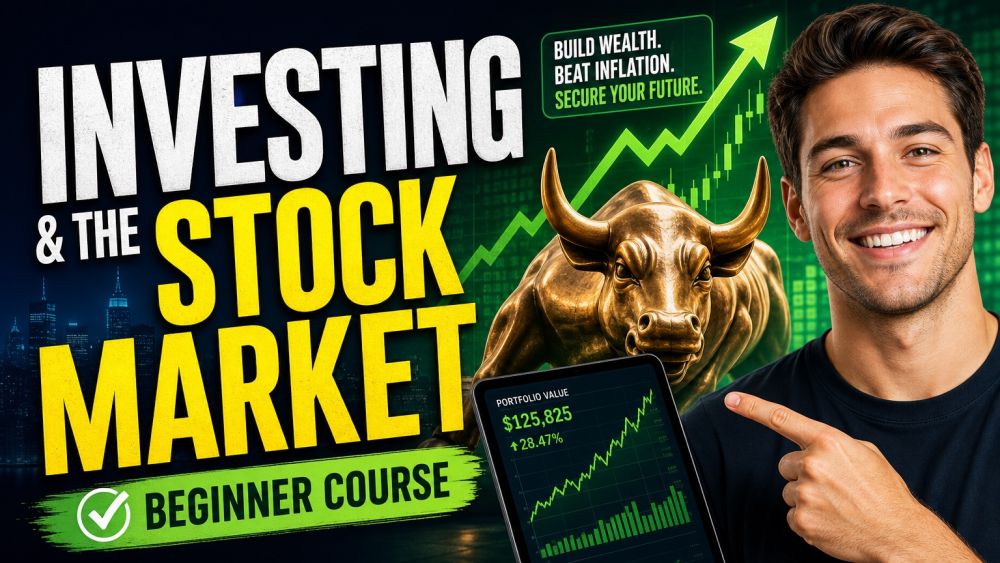
The stock market can feel like a foreign language full of tickers, charts, and jargon — but investing itself is simpler than it looks, and this beginner course proves it. You will start with the fundamentals: why investing beats letting cash sit idle, how compound growth turns small, regular amounts into real money over time, why inflation makes waiting expensive, and the difference between risk and return. From there you will learn how the stock market actually works — what a share represents, how exchanges and indexes function, and what really moves a price day to day. You will pick up the basics of reading a company before you buy it: revenue, earnings, a simple read on valuation, and the honest difference between picking individual stocks and buying a diversified fund. Then you will build a real portfolio using diversification, sensible asset allocation, low-cost index funds and ETFs, and a steady, automatic approach instead of guessing. Finally you will confront the part that wrecks most investors — their own psychology — learning to recognize common biases, ride out volatility without panicking, spot scams, and think in years instead of headlines. Every lesson favors plain language over jargon and long-term thinking over hot tips. By the end you will invest with a clear, calm, repeatable plan.

📋 5 tracks ❓ 250 questions 💡 20 tips 🎬 10 videos ⏱ ~5h

Videos

See all

Tracks

Investing starts to make sense the moment you understand a few core ideas, and this track covers exactly those. You will learn why investing beats simply saving, how compound growth quietly turns small contributions into serious money over decades, and why inflation makes cash lose value while it sits still. You will compare risk and return so you know what you are actually trading off, and get a plain-language tour of account types — brokerage, retirement, and tax-advantaged — so you know where to put your money. There is no jargon here, just the mental model every investor needs before touching a single stock. By the end you will understand why time, not timing, is your biggest advantage.

Buying a stock is simple; understanding what you actually own is where most beginners get lost. This track fixes that. You will learn what a share really represents — a small piece of a real company — and how stock exchanges connect buyers and sellers around the world. You will see how prices actually move, driven by supply, demand, earnings, and expectations rather than luck, and get a clear explanation of what a market index like the S&P 500 measures and why it matters. You will also learn how dividends work and how companies return cash to shareholders. By the end you will read stock market news and headlines with real understanding instead of confusion, and know exactly what you are buying before you buy it.

Anyone can buy a stock; this track teaches you to actually look at one first. You will learn how to read the basics of a company before investing — revenue, earnings, and growth trends — and get a plain-language introduction to valuation tools like the P/E ratio, without turning it into an accounting class. You will compare buying individual stocks against buying an ETF that holds hundreds of companies at once, and learn which approach fits which kind of investor. You will also build simple research habits: where to find reliable information, what to ignore, and how much time is actually worth spending before you buy. By the end you will be able to look at any company or fund and form a reasonable, informed opinion instead of guessing or following a tip.

Owning a few random stocks is not a strategy — a portfolio is. This track shows you how to put the pieces together into something coherent. You will learn why diversification protects you from any single company or sector wrecking your results, how to think about asset allocation between stocks, bonds, and cash based on your goals and timeline, and why low-cost index funds and ETFs are the backbone of most successful long-term portfolios. You will practice dollar-cost averaging — investing the same amount on a regular schedule regardless of price — and learn how fees quietly eat into returns over time and how to keep them low. By the end you will be able to build and maintain a simple, diversified portfolio that matches your goals instead of chasing whatever is trending.

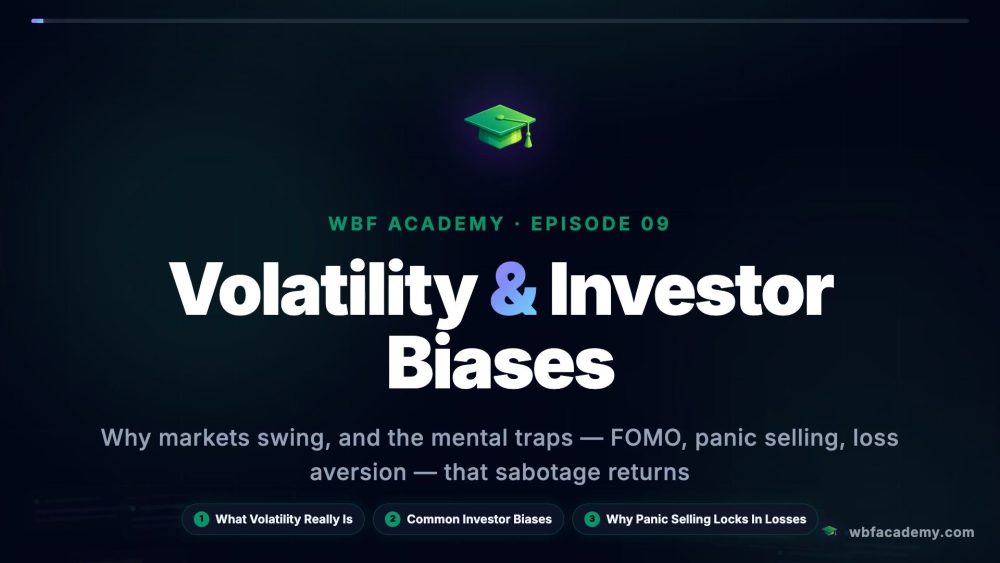
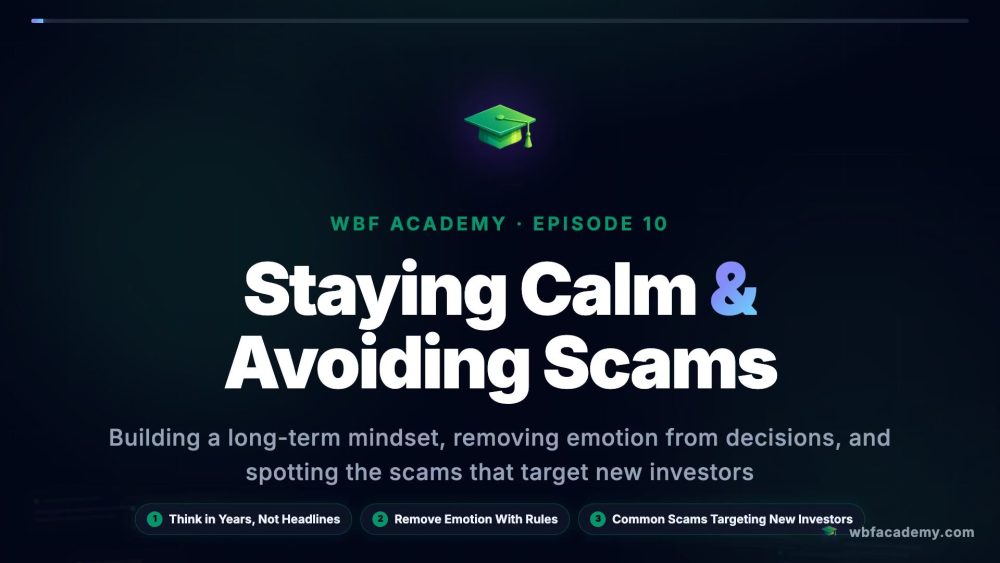
The biggest risk to most portfolios is not the market — it is the investor. This track tackles the psychological side that no spreadsheet can fix. You will learn how market volatility actually behaves, so a drop no longer feels like an emergency, and recognize the common biases that quietly sabotage decisions — chasing hot stocks, panic-selling, and overconfidence after a lucky win. You will build simple habits to avoid panic during downturns, hold a long-term mindset when headlines scream otherwise, and spot the warning signs of scams and get-rich-quick schemes that target new investors. By the end you will have the emotional discipline to stick with a sound plan through good years and bad ones — which is, more than any single pick, what actually builds wealth.

Certification Exam

🏆

Certification Exam

Investing & the Stock Market

30
Questions
45m
Time Limit
% 70%
To Pass

All tracks · No time pressure to start

🏆

Certification Exam

Investing & the Stock Market

#

30 Questions

All difficulty levels

45 Minutes

Auto-submits when time expires

%

70% to Pass

Earn your certification badge

No Going Back

Once you answer, you move forward

Tips

See all