Resume & Interview Mastery
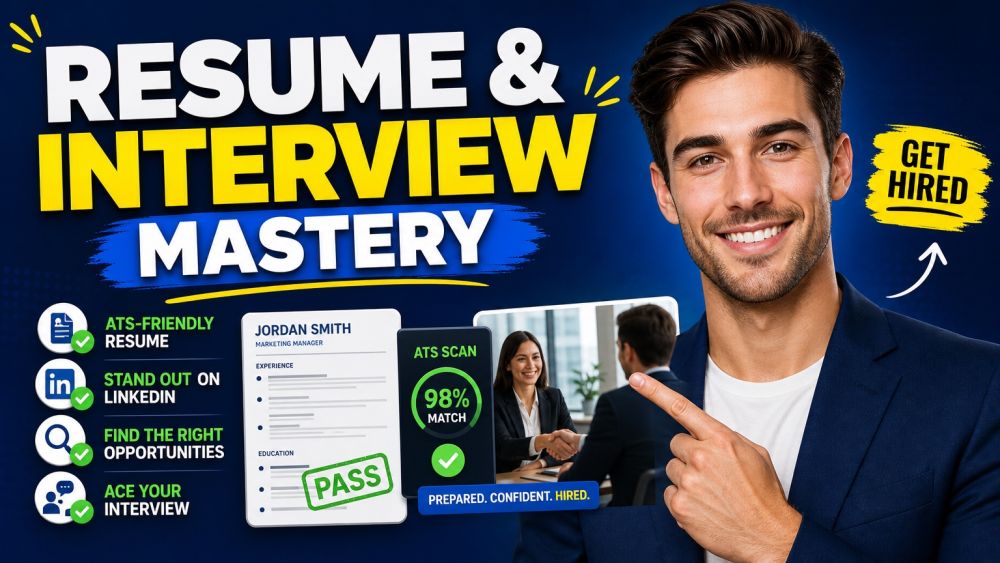
BeginnerGetting hired often comes down to a handful of skills nobody teaches you in school: writing a resume that survives an ATS scan, sounding confident on LinkedIn, finding the right roles, and walking into an interview prepared instead of anxious. This beginner course walks you through the entire job search from first draft to signed offer. You will build a resume with a clear structure, punchy bullet points, and the numbers that prove your impact, then learn to beat applicant tracking systems with the right keywords and formatting. You will turn your LinkedIn profile into a magnet for recruiters — headline, summary, and a network that actually works for you. You will learn where to look for real opportunities, how to tailor every application, and when a referral or a short cover letter changes everything. Then comes the interview: researching a company properly, telling your story with the STAR method, answering the questions everyone fears, and practicing until it feels natural. Finally you will learn to negotiate salary, ask smart questions of your own, and evaluate an offer instead of just accepting the first one. Every lesson is practical, example-driven, and built for real job searches, not theory. By the end you will have a complete, repeatable system to find a job, get noticed, and walk out with an offer you are proud of.
Videos
See allTracks
Most resumes get scanned for seconds, not read — so structure and clarity decide whether yours survives. This track shows you how to organize a resume that recruiters and applicant tracking systems both understand: clear sections, the right order, and a length that respects everyone's time. You will learn to write bullet points that start with strong action verbs and end with a number that proves impact, instead of vague duties. You will pick the keywords that beat an ATS scan without sounding robotic, choose a clean and consistent format, and tailor the same resume for different roles quickly. You will also learn what to cut — the details that hurt more than they help. By the end you will have a resume that gets opened, read, and remembered.
Recruiters search LinkedIn before they ever see your resume, so your profile has to work as hard as your resume does. This track walks you through building a profile that gets found and gets you noticed: a headline that says more than your job title, a summary that tells your story, and an experience section that mirrors your best resume bullets. You will learn to showcase real work — projects, posts, recommendations — so profile visitors see proof, not just claims. You will build the habit of growing a real network: connecting with purpose, commenting thoughtfully, and reaching out without sounding desperate. You will also learn what to turn on and off in your settings so recruiters can actually find you. By the end your LinkedIn profile will work for you around the clock.
Applying everywhere with the same resume rarely works — a smarter, targeted search gets far better results with far less effort. This track shows you where the good opportunities actually are: job boards, company pages, and the hidden market that never gets posted. You will learn to tailor an application to each role in minutes, not hours, by matching your experience to what the listing really asks for. You will build the habit of asking for referrals, since they open doors a cold application never will, and learn to track every application so nothing falls through the cracks. You will also write a short cover letter for when one is expected, and learn to follow up without seeming pushy. By the end you will run a job search that is organized, targeted, and far less exhausting.
An interview rewards preparation more than talent — the candidates who get offers are usually the ones who did their homework, not the smartest person in the room. This track builds that preparation step by step. You will learn to research a company properly so your answers show genuine interest, and to structure your best stories with the STAR method so they land clearly and confidently. You will practice answers to the questions that come up in almost every interview, plus the trickier ones about weaknesses, gaps, and conflict. You will also rehearse out loud, since that is what actually reduces nerves, and cover the logistics people forget — what to wear, what to bring, and how to follow up. By the end you will walk into any interview prepared instead of anxious.
The interview is not over when the easy questions end — the toughest moments and the final decision still lie ahead. This track prepares you for both. You will learn to answer the questions that trip people up, like why you left your last job and where you see yourself in five years, without rambling or oversharing. You will practice asking smart questions of your own that show curiosity and help you evaluate the role. Once an offer arrives, you will learn to negotiate salary and benefits calmly, using research instead of guesswork, and to weigh an offer beyond the number — growth, culture, and fit — deciding whether to accept, counter, or decline professionally. By the end you will finish a job search with an offer you understand and are proud to accept.
Certification Exam
Certification Exam
Resume & Interview Mastery
All tracks · No time pressure to start
Certification Exam
Resume & Interview Mastery
30 Questions
All difficulty levels
45 Minutes
Auto-submits when time expires
70% to Pass
Earn your certification badge
No Going Back
Once you answer, you move forward
Tips
See allEvaluate the whole offer, not just the salary
Growth, culture, and benefits shape the real number
Negotiate with a number, not a feeling
Research first, then anchor confidently
Ask questions that show you are evaluating them too
The interview is a two-way conversation
Turn weakness questions into growth stories
Name a real gap, then show what you did about it