WBF Academy
Piano for Beginners

Piano for Beginners

Beginner

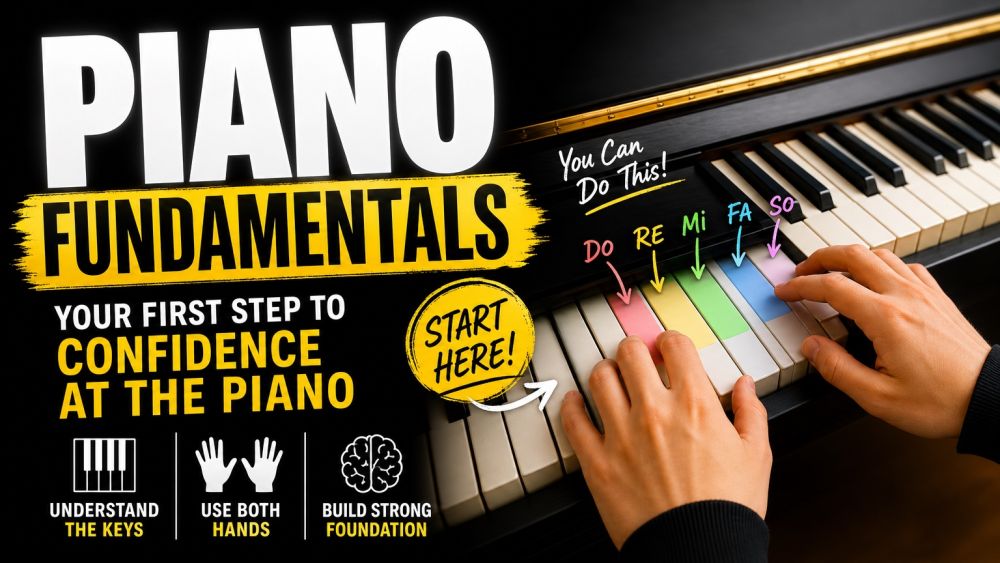
Sitting down at a piano for the first time can feel overwhelming — dozens of identical-looking keys, two hands to coordinate, and advice pulling in every direction. This beginner course cuts through the noise and gives you a clear, step-by-step path from silence to your first real songs. You will start with the basics that most beginners skip and later regret: knowing the parts of the piano, sitting with good posture, shaping a relaxed hand, and getting a clean first sound out of the keys. From there you learn to read the keyboard itself — naming every white and black key, finding middle C, and understanding octaves so you never feel lost among the keys again. You will build the vocabulary every pianist needs — your first chords, playing hands separately and then together, and the smooth coordination that turns single notes into real music. You will put it all together by playing easy melodies and three-chord songs built on the progressions used in thousands of hits. Along the way you will build a practice routine that fits a busy life, learn to warm up and stay relaxed so you play without strain, and avoid the habits that slow players down for years. By the end you will sit at a piano with confidence, play real songs from start to finish with both hands, and know exactly what to practice next.

📋 5 tracks ❓ 200 questions 💡 15 tips 🎬 7 videos ⏱ ~4h

Videos

See all

Tracks

Before you play a single note, a few fundamentals make everything else easier. This track starts at zero: the parts of the piano and what each one does, how to sit at the keyboard with good posture and the bench at the right height, and how to shape a relaxed, curved hand that lets your fingers move freely. You will learn how to number your fingers, press a key cleanly to produce a full, even sound, and play your very first notes without tension. Small habits taught here — posture, hand shape, staying relaxed — prevent the strain and frustration that make many beginners quit in the first week. By the end you will sit at the piano naturally and produce a clean, confident sound.

The piano keyboard looks like a wall of identical keys, but it follows a simple, repeating pattern — and once you see it, you can find any note instantly. This track teaches you to read the keyboard itself: the pattern of two and three black keys that anchors everything, how to find middle C and use it as your home base, and the names of every white and black key. You will learn what sharps and flats are and why one black key has two names, how octaves repeat the same notes higher and lower, and how to move around the keyboard with confidence. You will practice naming notes on sight and finding them by feel without looking down. By the end the keyboard will stop being a mystery and become a map you can read.

A melody played one finger at a time is only half the instrument — this track brings both hands and full chords into play. You will learn what a chord is, build your first major and minor chords from simple patterns, and play them cleanly so every note sounds together. Then you tackle the skill that defines the piano: using both hands at once, starting with a steady chord or bass in the left hand while the right hand plays a melody. You will practice hands separately first, then combine them slowly, and learn the coordination tricks that make two independent hands feel natural instead of impossible. By the end you will play full chords and use both hands together, the foundation of nearly every song you will ever play.

This is where everything comes together — notes, chords, and both hands turn into actual songs you recognize. You will learn easy melodies and songs built on just three or four chords, the kind used in thousands of hits across genres, and see how the same handful of progressions repeats again and again once you know what to listen for. You will practice keeping your place through verses and choruses, coordinating a left-hand accompaniment under a right-hand melody, and handling the trickiest spots inside a real song instead of an isolated drill. You will also learn simple ways to simplify a song when a part is still too hard, and how to build confidence by starting slow and speeding up gradually. By the end you will play complete, recognizable songs from start to finish, not just exercises.

Getting good at piano is less about talent and more about smart, consistent practice — this track shows you how to build that habit. You will learn how to structure a short daily practice session so it fits a busy life, how to warm up your hands and stay relaxed so you play without strain, and how to practice hands-separately then together so hard passages actually improve. You will spot the bad habits that quietly slow beginners down for years — tension, rushing, staring at your hands, and skipping the boring basics — and learn how to fix them early. You will also learn how to track progress so practice feels rewarding, and get a clear roadmap of what to learn next once you finish this course: reading sheet music, scales, and beyond. By the end you will have a sustainable practice routine and a clear path forward.

Certification Exam

🏆

Certification Exam

Piano for Beginners

30
Questions
45m
Time Limit
% 70%
To Pass

All tracks · No time pressure to start

🏆

Certification Exam

Piano for Beginners

#

30 Questions

All difficulty levels

45 Minutes

Auto-submits when time expires

%

70% to Pass

Earn your certification badge

No Going Back

Once you answer, you move forward

Tips

See all